‘Show us the money’: The stocks Pengana has been busy buying
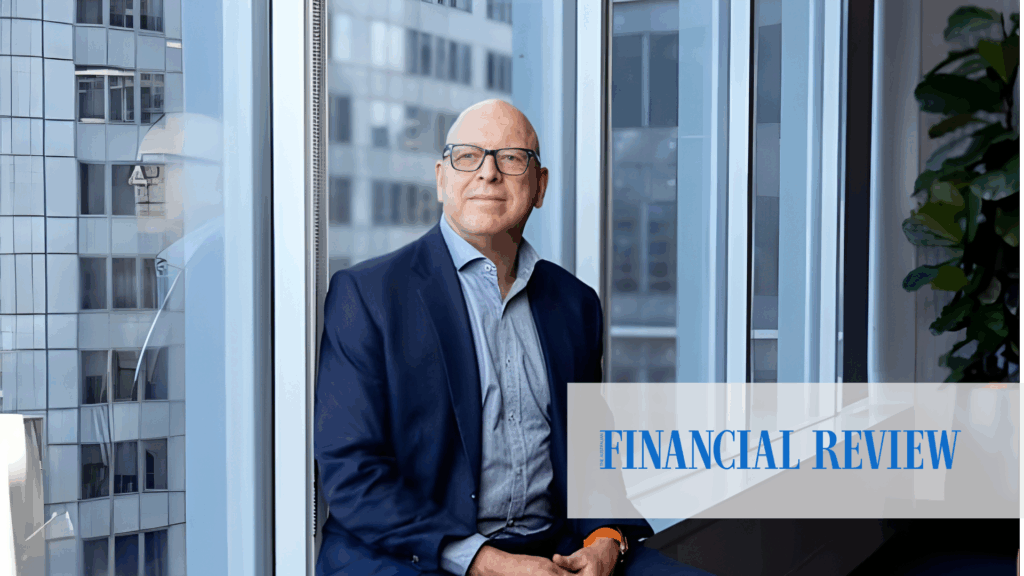
Rhett Kessler, who leads the firm’s Australian equities team, is bullish on “boring” companies that have turned cheap, including takeover target BlueScope Steel.
For nearly two decades, Pengana Capital’s head of Australian equities, Rhett Kessler, has had one simple message for company boards and management teams pitching their stock: show us the money.
It is a mantra forged through cycles, booms and busts, and one that has shaped a stock portfolio he says is deliberately out of step with sharemarket fads.
While momentum and passive investing have dominated the flow of money on the ASX, Kessler’s fund has stuck to a valuation-first and cash-driven discipline that has survived the global financial crisis, a pandemic, and a bruising period for active managers.
“We distil everything down to cash,” he says. “What matters to us is the sustainable after-tax cash earnings yield relative to what we pay for the business.”
Pengana’s Australian equities strategy manages about $500 million, almost entirely for high-net-worth individuals and financial planners. The fund has never managed institutional money – about one quarter of assets comes directly from wealthy clients, and the rest from advisers.
He also likes the fact that CSL’s plasma division remains an oligopoly with defensive characteristics, and its vaccines business has been priced by the market for near disaster amid the anti-vax rhetoric in the US.
But Kessler says cost control has been disappointing, and returns on invested capital have fallen sharply from historic highs, issues that the company’s new leadership must address.
“We’re not there for the short term,” he says. “But the assets are worth more than they’re priced at.”
Still, Kessler concedes that he is cautious because CSL needs to sharpen its focus on efficiency and return on invested capital.
“They’ve had some fundamental errors in execution, but I think there’s a path to fix that,” he says. He points to the recent reshaping of division heads and the chief financial officer as examples of strengthening governance.
“Now you can buy very ordinary, very reliable businesses at multiples that actually make sense.” — Rhett Kessler, Pengana Capital
For Kessler, stock picking is all about finding businesses that are not only “boring” but also offer services deeply embedded in everyday life, which people will keep paying for regardless of the environment.
“These are what I call toilet paper and toothpaste businesses,” he says. “People don’t wake up in the morning and decide whether they’re optimistic or pessimistic before brushing their teeth or using their mobile phone. Demand just turns up.”
It’s for this reason that sectors such as insurance, packaging, healthcare, telecommunications and essential infrastructure dominate this part of the portfolio. Companies like IAG, Telstra, Amcor and Ramsay Health Care may lack the glamour of a tech stock, but they possess predictable demand, pricing power and an ability to convert earnings into cash.
The sell-off in large-cap defensive companies at the end of last year created an unusual opportunity to snap up such stocks.
So while the broader sharemarket has been fixated on interest rates, macro forecasts and earnings downgrades, valuations for many of the essential-service providers had started to become very compelling.
“The market has been assuming the best for a long time,” Kessler says. “Now you can buy very ordinary, very reliable businesses at multiples that actually make sense.”
More recently, the fund has been building exposure to businesses leveraged to Australia’s housing shortage. The thesis is straightforward: demand far exceeds supply, and structural bottlenecks – approvals, labour and infrastructure – have constrained construction.
So Pengana has invested in companies that it believes can still earn acceptable cash returns even if construction activity levels falter, such as Stockland, Mirvac, BlueScope Steel and James Hardie.
BlueScope was aggressively topped up during the market sell-off late last year, when the stock briefly fell below net tangible assets. The move has proved timely after Kerry Stokes’ SGH made a $13 billion takeover offer for Australia’s largest steelmaker last week.
“You have to be brave when everyone thinks the world is ending,” Kessler says. “We’re buying underlying cash flows, not headlines.”
The fund was launched in July 2008, just a few months before US investment bank Lehman Brothers collapsed and the onslaught of the global financial crisis, which proved a baptism of fire for Kessler.
It took the team almost four years for the fund to break even, including one particularly bruising year along the way. But over time, Kessler says its performance has been consistently strong enough to build a durable business and a loyal investor base, even as the rest of the active management industry has thinned out.
The fund returned 9.4 per cent over one year and 10.6 per cent per annum over three years, lagging its benchmark by about 1 per cent over both time frames. Since inception, it has returned 8.7 per cent a year.
Performance has been broadly in line with the fund’s stated goal of delivering the RBA cash rate plus 6 per cent.
“We’ve never changed our approach,” Kessler says. “And after all these years, that consistency is probably what our clients value most.”
View the original AFR article here.
Licensed by Copyright Agency. You must not copy this work without permission.